The air inside the Louvre usually feels like a held breath. It is thick with the scent of floor wax, old stone, and the collective respiration of thirty thousand tourists a day. But lately, that breath has turned sour. Jean-Luc Martinez, the man who once held the keys to the most prestigious kingdom in the art world, didn’t just leave his office. He left behind a trail of whispers that have stained the very marble he spent eight years protecting.
Museums are supposed to be fortresses of memory. We trust them to be the objective arbiters of history, the places where the "truth" of our civilization is kept under climate-controlled glass. When the president of such an institution resigns under the weight of an international trafficking scandal, it isn’t just a human resources problem. It is a fracture in the foundation of how we value the past.
The Weight of the Crown
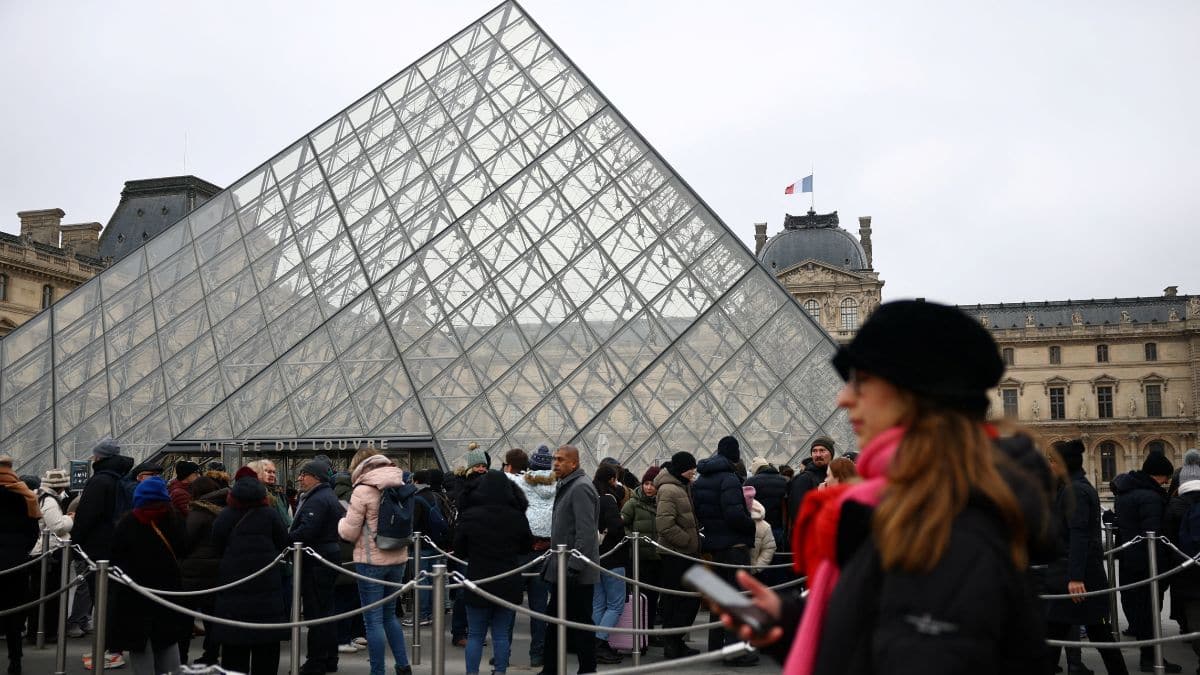
Imagine standing in the center of the Cour Napoléon at three in the morning. The glass pyramid glows with a cold, geometric precision. For Martinez, this wasn't just a workplace; it was a legacy. He was the first "commoner" to lead the Louvre, a man of humble origins who rose through the ranks of archaeology to sit on a throne usually reserved for the French elite. That narrative—the outsider who mastered the inside—is part of what makes the current fallout so bitter.
The allegations don't involve petty theft or accounting errors. They involve the high-stakes, shadow-drenched world of antiquity smuggling. We are talking about five-thousand-year-old Egyptian treasures, items that survived the rise and fall of empires only to be allegedly laundered through the very galleries meant to sanctify them.
Consider a hypothetical curator, let’s call her Claire. Claire spends her life studying the brushstrokes of the Renaissance or the limestone carvings of the Middle Kingdom. She believes that every object has a soul and a specific "provenance"—a documented history of where it has been. When a piece arrives with a "gap" in its history, it’s like a person with no fingerprints. You don't know where they’ve been or what they’ve done. For Claire, seeing a museum leader bypass those checks is more than a crime. It is a betrayal of the priesthood.
The Paper Trail of Ghost Antiquities
The core of the scandal involves a pink granite stele depicting King Tutankhamun. It is a magnificent piece of history, or at least it appeared to be when the Louvre Abu Dhabi—the French museum's billion-dollar sister project—acquired it. The problem is that the documents proving its legal exit from Egypt may have been forged.
When we talk about "money laundering," we think of briefcases full of cash. But "culture laundering" is more sophisticated. It involves taking a blood-soaked artifact, looted from a site in the middle of a desert during a revolution, and wrapping it in layers of fake invoices, forged letters of transit, and prestigious catalog entries. By the time it hits the museum floor, it looks clean. It looks legitimate.
Martinez sat on the committee that approved these purchases. The French authorities are now asking a simple, devastating question: Did he know the paperwork was a lie, or was he so blinded by the desire to fill his galleries with masterpieces that he chose not to look too closely?
Ignorance at that level is rarely an accident. It is a strategy.
The Invisible Stakes of a Broken Trust
Why does this matter to someone who might never visit Paris? Because the art market is one of the last great unregulated frontiers of global finance. It is a place where value is subjective and secrecy is a virtue. When the world’s most famous museum is implicated in a trafficking ring, it signals to every looter and black-market broker that the guards are sleeping—or worse, that they are open for business.
The real victims aren't the wealthy donors or the government officials. The victims are the countries whose history is being stripped away. Every time a looted statue is sold into a private collection or a compromised museum, a piece of a nation’s identity is erased. You cannot study a find if you don't know the soil it came from. Without context, an artifact is just a beautiful rock. It is a word ripped out of a sentence; you can admire the calligraphy, but you’ve lost the meaning.
The tension in the Louvre right now isn't just about Martinez. It's about the fear that the institution has become too big, too corporate, and too hungry for expansion. The partnership with Abu Dhabi brought in massive amounts of capital, but it also brought a pressure to perform, to acquire, and to dominate the global stage.
The Cracked Pedestal
Walking through the Denon Wing, you see the Winged Victory of Samothrace. She stands at the top of the stairs, headless but triumphant, a symbol of endurance. But even she looks different when you realize the person in charge of her safety was being led away in a police van for questioning.
The museum world is currently undergoing a painful reckoning. From the debates over the Parthenon Marbles to the return of the Benin Bronzes, the question of "who owns history?" is louder than ever. Martinez’s resignation is a lightning bolt in the middle of that storm. It proves that even the most "civilized" institutions are not immune to the primal greed of the black market.
The human element here is the loss of innocence. We want to believe that art is a higher calling. We want to believe that the people who curate these halls are different from the people who trade in oil or arms. We want the Louvre to be a sanctuary.
But sanctuaries are built by people. And people are fragile, ambitious, and sometimes, tragically short-sighted.
The investigation continues. The lawyers will argue over signatures and dates. The diplomats will try to smooth over the cracks in the Franco-Egyptian relationship. But for the visitor standing in front of a golden sarcophagus, the experience has changed. You find yourself looking past the gold, searching for the ghost of a price tag, wondering if the story on the wall is the whole truth or just a very expensive lie.
The lights go out in the pyramid at night, but the questions don't stop. They echo against the glass, waiting for an answer that may never be clean enough to satisfy the ghost of King Tut.