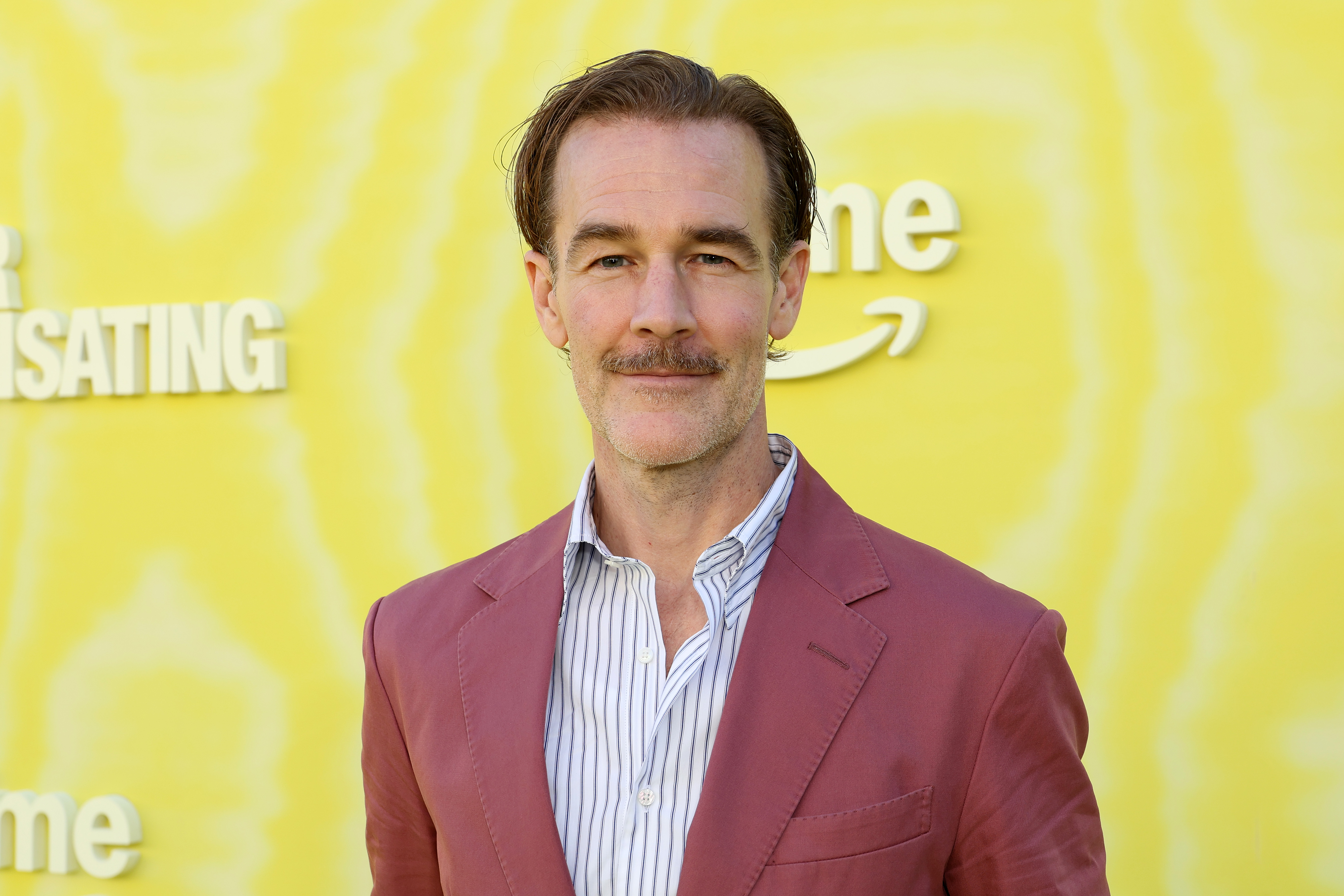
The shelf life of a teen idol is usually shorter than a carton of milk. One day you are the face on every bedroom wall in America, and the next, you are a trivia question at a dive bar. James Van Der Beek should have followed that trajectory. When Dawson’s Creek wrapped in 2003, he was the personification of a very specific, very earnest brand of 90s melodrama. He was the "sensitive guy" in an era that was rapidly moving toward irony and grit. Most actors in his position spend the next two decades fighting their legacy, auditioning for gritty reboots to prove they have "range," or disappearing into the quiet oblivion of direct-to-video features.
Van Der Beek did something more radical. He leaned into the wreckage.
By systematically dismantling his own image through self-parody—most notably in Don't Trust the B---- in Apartment 23 and the viral "Crying Dawson" meme—Van Der Beek executed a rare pivot. He stopped trying to be a leading man and started being a brand. It wasn't just about "being in on the joke." It was a strategic survival tactic in an industry that loves to eat its young. He realized early on that if you own the mockery, nobody can use it against you.
The Crying Face that Launched a Thousand Server Requests
The internet is a cruel curator. It doesn't care about your Shakespearean training or your dramatic timing. It cares about a single, distorted frame of film from a 1998 episode of a WB teen drama. The "Crying Dawson" meme became a foundational element of internet culture, a shorthand for ugly-crying that persisted long after the show’s demographic had aged into parenthood.
For many actors, this would be a source of profound resentment. To have your professional output reduced to a three-second loop of facial contortion is a special kind of hell. Van Der Beek’s brilliance lay in his refusal to be offended. Instead of ignoring the meme, he launched "Van Der Week" with Funny or Die, creating a series of videos that showcased different emotional "GIFs" for fans to use.
This was the turning point. By participating in the mockery, he stripped the meme of its power to diminish him. He wasn't the victim of the internet's cruelty; he was the producer of its content. This shift from "subject" to "collaborator" is the blueprint for modern celebrity longevity. In the current media ecosystem, relevance is the only currency that matters, and Van Der Beek found a way to mint it out of his own perceived failures.
The Apartment 23 Gambit
If the Funny or Die sketches were a skirmish, Don't Trust the B---- in Apartment 23 was the full-scale invasion. Playing a fictionalized, hyper-vain version of himself was a move that shouldn't have worked. Usually, when actors play themselves, it feels like a desperate plea for attention or a hollow cameo. Van Der Beek, however, committed to the bit with a terrifying level of sincerity.
He played "James Van Der Beek" as a man perpetually stuck in the gravitational pull of his own past fame, wearing the iconic Dawson flannel shirts to bed and using his Creek theme song as a mating call. This wasn't just self-deprecation. It was a forensic autopsy of the "Teen Idol" archetype. He exposed the absurdity of the industry's obsession with youth and the vanity required to stay in the spotlight.
The Mechanics of Meta Humor
To understand why this worked, you have to look at the psychology of the audience. We live in a post-sincerity world. We are suspicious of celebrities who take themselves too seriously. When Van Der Beek mocked his own career, he built a bridge of authenticity with an audience that had outgrown the earnestness of the 90s.
- Defanging the Critics: You cannot call an actor a "has-been" if they are already playing a "has-been" for laughs on a major network.
- Re-branding through Satire: He moved from being "the guy from that old show" to "that funny guy who gets it."
- Control of Narrative: By writing the jokes himself, he ensured the punchline always ended with him being the smartest person in the room.
The Harsh Reality of the Leading Man Trap
The "Leading Man Trap" is a well-documented phenomenon in Hollywood. An actor gets cast in a role that perfectly captures the zeitgeist. They become synonymous with a character. When the show ends, the industry struggles to see them as anything else.
Consider the "Class of the WB." While Michelle Williams transitioned into a four-time Oscar nominee by taking somber, transformative roles, and Joshua Jackson found a steady niche in prestige television like Fringe and The Affair, Van Der Beek faced a steeper climb. He was the titular character. He was the face of the brand. He was Dawson Leery.
He tried the traditional route first. Varsity Blues was a hit, but it reinforced the "all-American jock/hero" trope rather than breaking it. The Rules of Attraction was a deliberate attempt to shock the system—playing a drug-dealing, nihilistic version of a collegiate anti-hero. It was a cult success but didn't provide the mainstream pivot he needed. It became clear that he wasn't going to outrun Dawson. He had to absorb him.
Transitioning to the Modern Dad Archetype
The second act of Van Der Beek’s career isn't just about comedy; it’s about a savvy transition into lifestyle branding. As his original fanbase aged, he aged with them. He moved his family to Texas, became a vocal advocate for a more grounded, rural lifestyle, and started sharing the messy, unvarnished realities of fatherhood on social media.
This was a pivot from "Teen Heartthrob" to "Relatable Father Figure." It’s a move that many actors fail to make because they are too protective of their vanity. Van Der Beek embraced the grey in his beard and the chaos of a large family. He replaced the staged paparazzi shots of the 90s with raw, handheld videos of life on a ranch.
This isn't an accident. It’s a diversification of his portfolio. By becoming a lifestyle influencer, he decoupled his income and relevance from the whims of casting directors. He created his own platform.
The Health Crisis and the New Perspective
Recently, the narrative around Van Der Beek shifted again, moving from the professional to the deeply personal. His public disclosure of a colorectal cancer diagnosis changed the tone of his public persona. It was no longer about the joke or the brand; it was about the fundamental human experience of mortality.
Even here, his approach remained consistent with the transparency he developed during his "meta" years. He didn't hide behind a publicist’s vague statement. He spoke directly to his followers, acknowledging the fear and the logistics of the fight. This level of vulnerability is the final evolution of his career. He moved from being a fictional character to a parody of a celebrity, and finally, to a man who is undeniably real.
The industry often demands that celebrities remain static—frozen in the moment of their greatest success. We want our teen idols to stay young and our heroes to stay invincible. Van Der Beek’s career is a masterclass in refusing that demand. He understood that the only way to survive the crushing weight of fame is to be fluid.
The Blueprint for Career Longevity
What can other public figures learn from the Van Der Beek model? It comes down to a few hard truths about the nature of modern fame.
- Own your baggage: If there is a "crying face" in your past, don't run from it. Put it on a t-shirt.
- Pivot before you are forced to: He started the self-parody while he was still getting leading man offers, not after they dried up.
- Authenticity is a weapon: In an age of AI and curated perfection, being "in on the joke" is the only way to prove you are human.
Most actors are terrified of being a punchline. They spend millions on PR to ensure they are always seen in the best light. Van Der Beek realized that the punchline is where the power is. If you are the one telling the joke, you aren't the victim of the laugh; you are the one directing the symphony.
He didn't just survive Dawson’s Creek. He killed Dawson Leery so that James Van Der Beek could live. It was a cold, calculated, and ultimately brilliant piece of career engineering. The next time you see that crying meme, remember that the man in the picture is laughing all the way to the bank, fully aware of exactly how much that single tear is worth.
Check your own ego at the door and look at your "failures" not as dead ends, but as raw material for your next transformation.


