The air inside the Supreme Court of the United States does not move like the air outside. It is heavy. It carries the scent of old paper, floor wax, and the crushing weight of history. For most people, walking into that chamber is a once-in-a-lifetime brush with the sublime. For Neal Katyal, it is his office.
He stands at the lectern, a slight figure against the towering marble, preparing to argue his fifty-first case before the highest court in the land. This isn't just about a legal technicality or a corporate merger. This time, the stakes involve the very fabric of how nations talk to each other—and how one man in the White House can decide to tear that fabric apart.
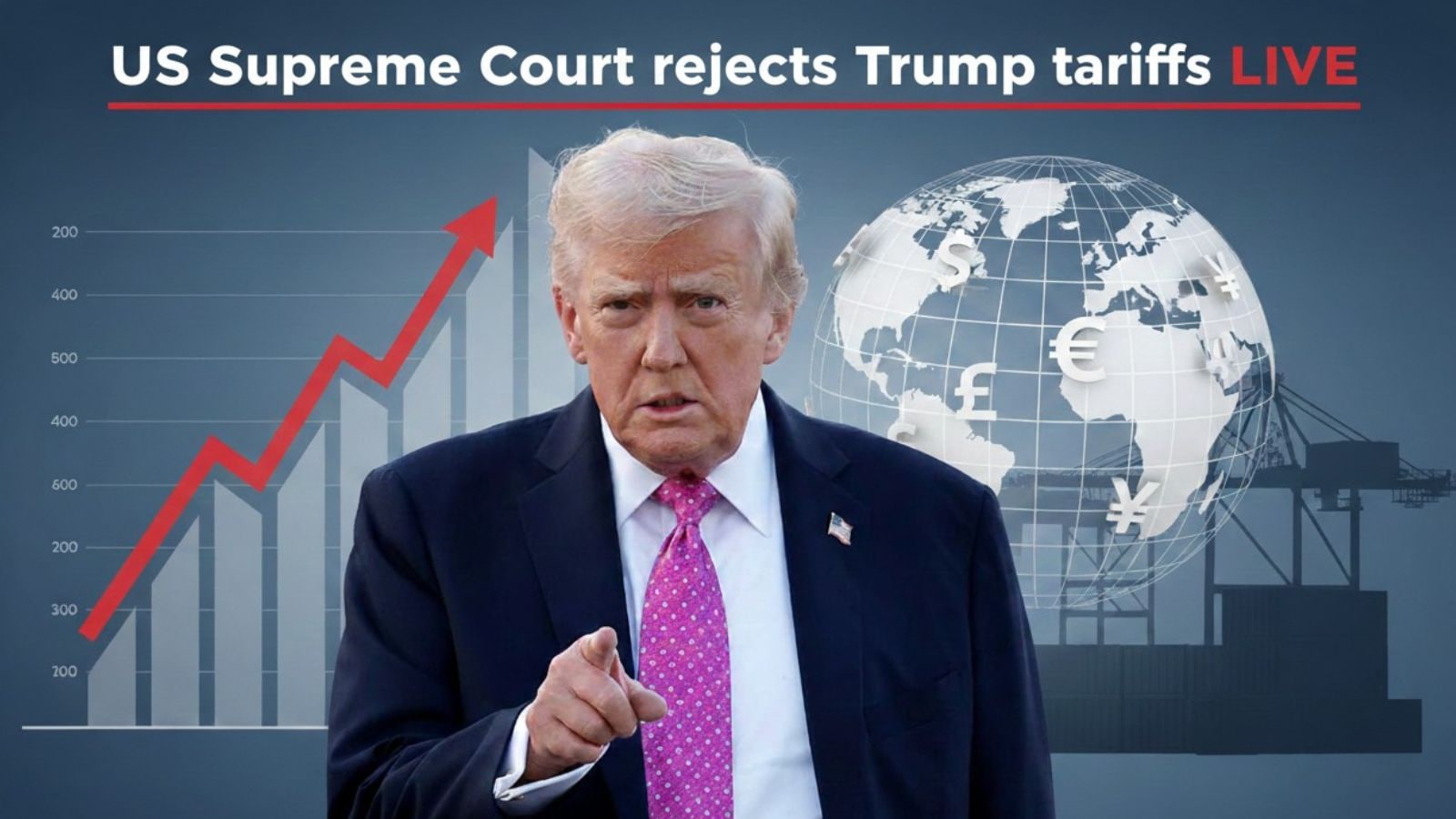
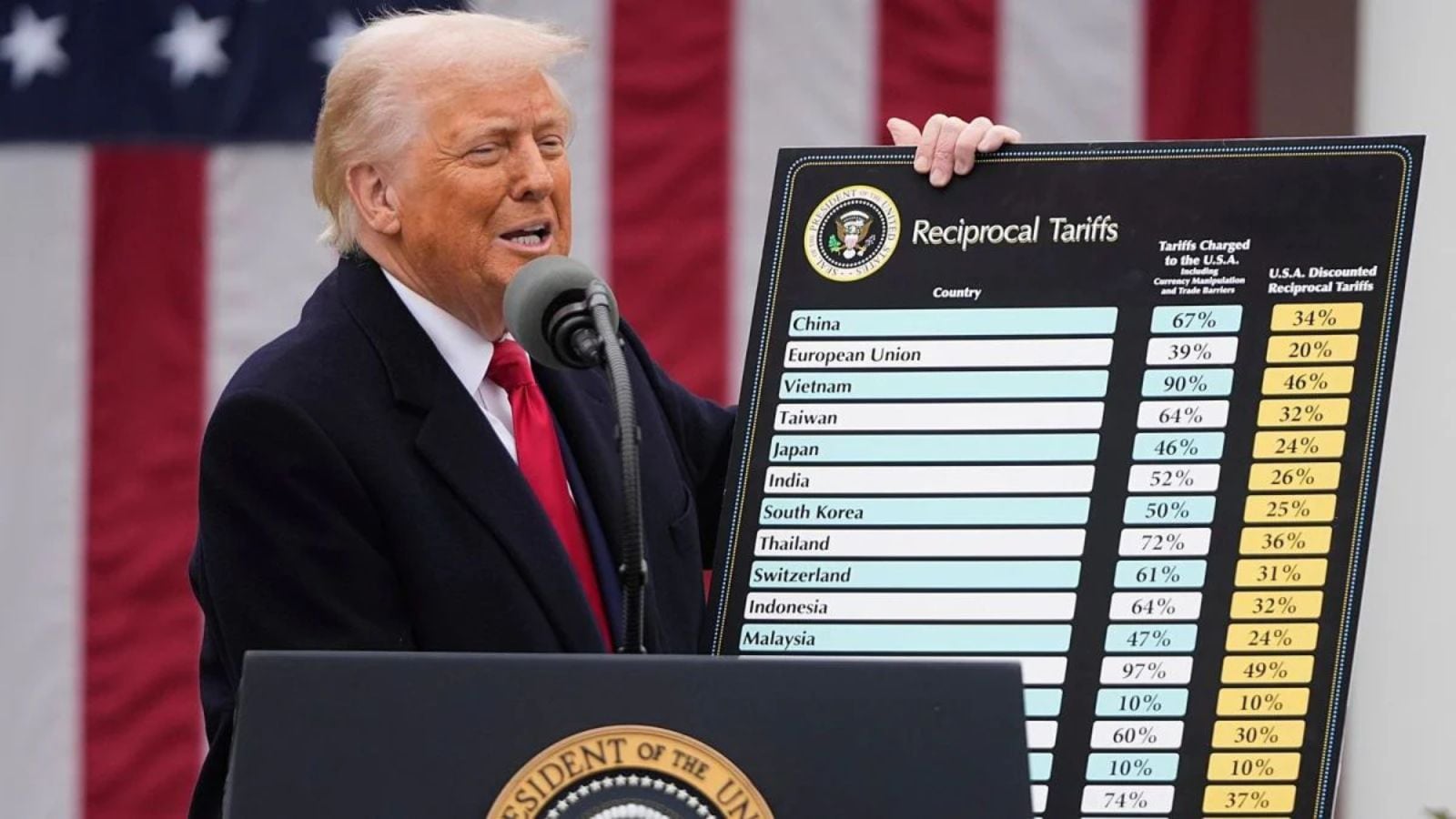
We often think of trade as a series of spreadsheets. We see percentages, tariffs, and port-of-entry data. But trade is actually a story of a farmer in Iowa who can’t sell his soy, a factory worker in Ohio whose parts are stuck in a shipping container, and a family in Mumbai waiting for a piece of medical equipment that just became 25% more expensive. When Donald Trump decided to implement global tariffs, he wasn't just changing a price tag. He was changing lives.
Neal Katyal decided to change the narrative back.
The Son of an Engineer
To understand why a lawyer becomes the shield against executive overreach, you have to look at where he started. Katyal’s story isn't one of inherited silver spoons. It is the classic, rhythmic beat of the American Dream. His parents immigrated from India in the 1960s. His father was an engineer; his mother, a pediatrician. They brought with them the belief that the law isn't a weapon for the powerful, but a set of rules that protects everyone.
Growing up in Chicago, Katyal wasn't a firebrand. He was a student of logic. He understood early on that if you know the rules better than the person who wrote them, you can win. This realization led him to Yale Law School, then to a clerkship with Justice Stephen Breyer, and eventually to the position of Acting Solicitor General of the United States.
He became the government’s lawyer. But more importantly, he became the Constitution’s lawyer.
The Power of the Pen Against the Power of the Podium
The conflict over global tariffs felt like a foregone conclusion to many. The executive branch has long claimed broad authority over national security. Under Section 232 of the Trade Expansion Act of 1962, a president can bypass Congress to impose tariffs if they believe a specific import threatens national security.
It is a massive loophole.
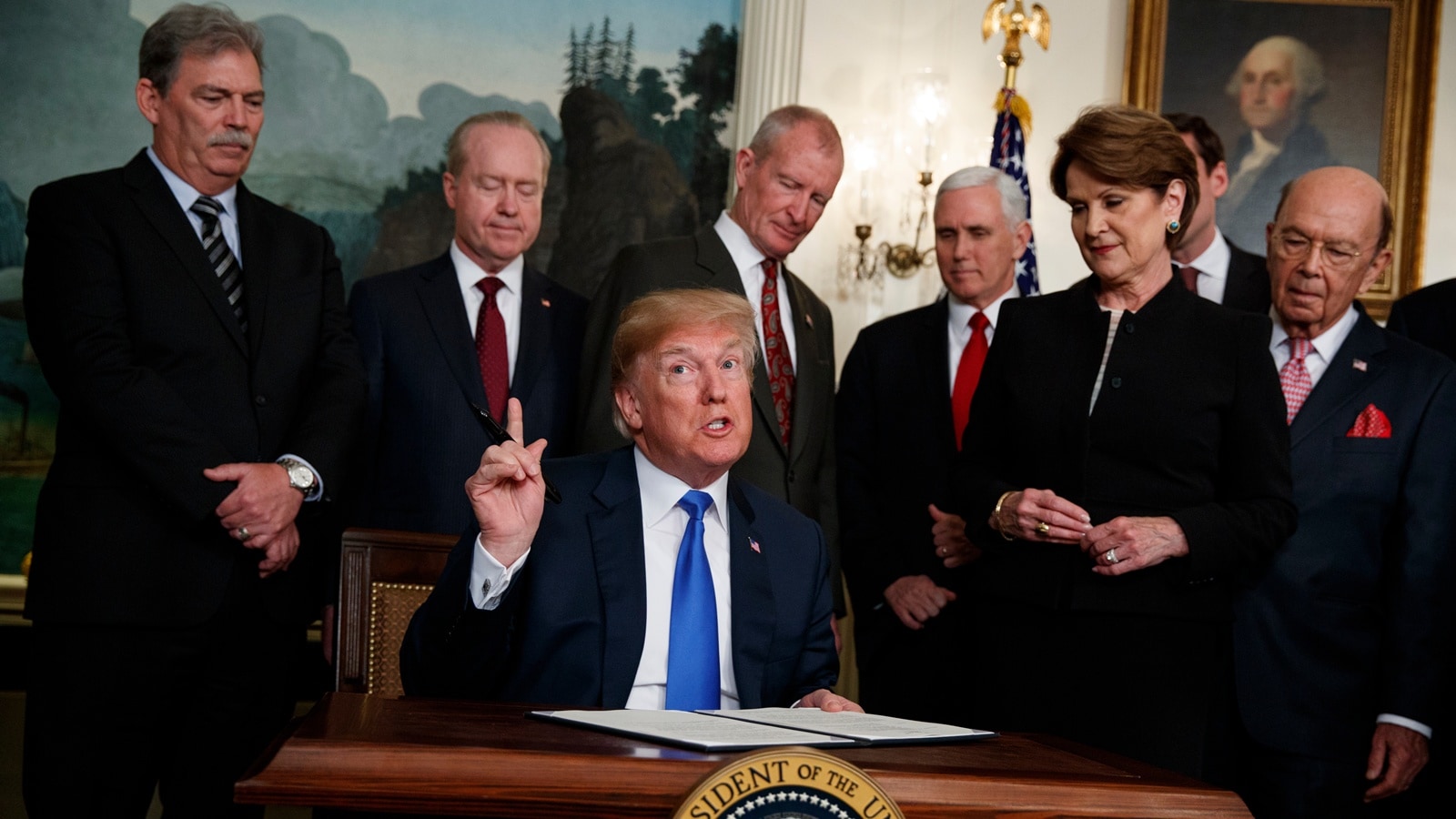
The Trump administration used this "national security" justification to slap tariffs on steel and aluminum from almost everywhere—even from staunch allies. It was a move that rattled global markets and sent the cost of American manufacturing spiraling. Most lawyers looked at the 1962 Act and shrugged. They saw a wall.
Katyal saw a crack.
He represented a group of businesses and trade organizations that argued the President had overstepped. The core of his argument wasn't just that the tariffs were bad for business—though they were. His argument was that the law didn't give the President a blank check to define "national security" however he saw fit on a Tuesday morning.
Think of it like a homeowner's association. If the rules say you can only paint your house "earth tones" to preserve the neighborhood's aesthetic, the president of the HOA can't suddenly decide that neon purple is an earth tone because he’s having a bad day. There has to be a standard. There has to be a limit.
A Career Built on Saying No
This wasn't Katyal’s first time standing up to a president. Years earlier, during the Bush administration, he took on the case of Salim Ahmed Hamdan, a driver for Osama bin Laden. At the time, the government argued that they could hold detainees at Guantanamo Bay indefinitely without a trial.
It was an unpopular case. People called Katyal a traitor. They couldn't understand why he would defend a man associated with terror.
"I'm not defending the man," he would say. "I'm defending the system."
He won. Hamdan v. Rumsfeld became a landmark case, proving that even in a time of war, the President is not above the law. That victory set the stage for his challenge against the global tariffs. It established a pattern: Katyal is the person you call when the executive branch decides the rules no longer apply to them.
The Human Cost of a Trade War
While the lawyers argued in DC, the reality of the tariffs hit the ground hard. Imagine a small company in Michigan that makes specialized medical devices. They rely on a specific type of high-grade aluminum that is only produced in two factories in Europe. Suddenly, because of a stroke of a pen in Washington, their costs jump 25%.
They have two choices.
They can raise their prices, which means the hospitals—and eventually the patients—pay more for life-saving care. Or, they can lay off ten people in the assembly line to cover the difference. This is the "invisible stake" Katyal was fighting for. Behind the dry legal filings about Section 232 were real people whose livelihoods were being gambled on a political whim.
Katyal’s brilliance lies in his ability to make a judge see those ten people in Michigan while he’s talking about the nuances of 1960s trade legislation. He bridges the gap between the abstract and the visceral.
The Courtroom as a Theatre of Logic
Watching Katyal argue is like watching a grandmaster play speed chess. He doesn't use notes. He stands there, hands often gripped to the sides of the lectern, and answers questions from nine of the sharpest legal minds in the country with surgical precision.
Justice Alito might throw a curveball about historical precedent. Katyal catches it, pivots, and cites a case from 1892 that reinforces his point. Justice Sotomayor might ask about the practical implications for workers. He has the statistics ready.
He is famous for his preparation. He conducts dozens of "moot courts," where colleagues grill him for hours, trying to find a single weak point in his armor. By the time he steps into the actual Supreme Court, he has already heard every possible counter-argument. He has lived the case a thousand times before it begins.
This level of obsession is what it takes to dismantle a presidential order. You cannot win on passion alone. You win on the relentless application of logic against power.
Why This Matters Now
We live in an era where the lines of authority are becoming blurred. The executive branch—regardless of who sits in the Oval Office—tends to expand its power over time. It is a natural gravity. Without people like Neal Katyal to pull back, that gravity eventually collapses the structures that keep a democracy healthy.
The strike-down of the global tariffs wasn't just a win for importers or a win for Indian-American representation in the upper echelons of the law. It was a reminder that the system still works if someone is brave enough to demand that it does. It proved that "national security" isn't a magic word that makes the Constitution disappear.
Katyal remains a polarizing figure. To some, he is a hero of the resistance. To others, he is a legal opportunist. But if you strip away the politics, you are left with a man who believes deeply in the mechanics of justice. He is a craftsman. He views the law as a delicate clock; if one gear grows too large and starts crushing the others, the whole thing stops keeping time.
The Long Game
Success in the Supreme Court isn't about a single "gotcha" moment. It’s about the long game. It’s about being the person who stays up until 4:00 AM reading trade reports from the 1930s to find the one sentence that proves a president is overreaching.
Neal Katyal’s legacy won't be measured in the number of cases he won, but in the number of times he forced the most powerful office in the world to stop and explain itself.
As he walks out of the Supreme Court, past the statues of Contemplation of Justice and the Guardian of Law, he blends into the DC crowd. He looks like any other professional in a well-tailored suit. But in his briefcase, he carries the precedents that will protect the next generation of farmers, factory workers, and citizens.
The weight of the air in the court doesn't bother him anymore. He’s learned how to breathe it. He’s learned how to use it to speak truth to power, one syllable at a time, until the walls of the executive office finally begin to listen.
The next time a headline flashes about a new trade war or a sweeping executive order, remember the man in the quiet room. Remember that the law is only as strong as the people willing to stand up and speak it into existence.
Somewhere, in a small office cluttered with briefs and coffee cups, Neal Katyal is already preparing for the fifty-second time.