The traditional Los Angeles nightclub is gasping for air, choked by $25 cocktails and the exhausting social performance of "being seen." In its place, a Filipino supermarket chain has become the city’s most improbable cultural epicenter. This isn't a fluke of the algorithm or a fleeting TikTok gag. Seafood City is currently absorbing the social capital once reserved for the Sunset Strip, and it is doing so by offering the one thing modern nightlife has systematically engineered out of the experience: authentic, uncurated community.
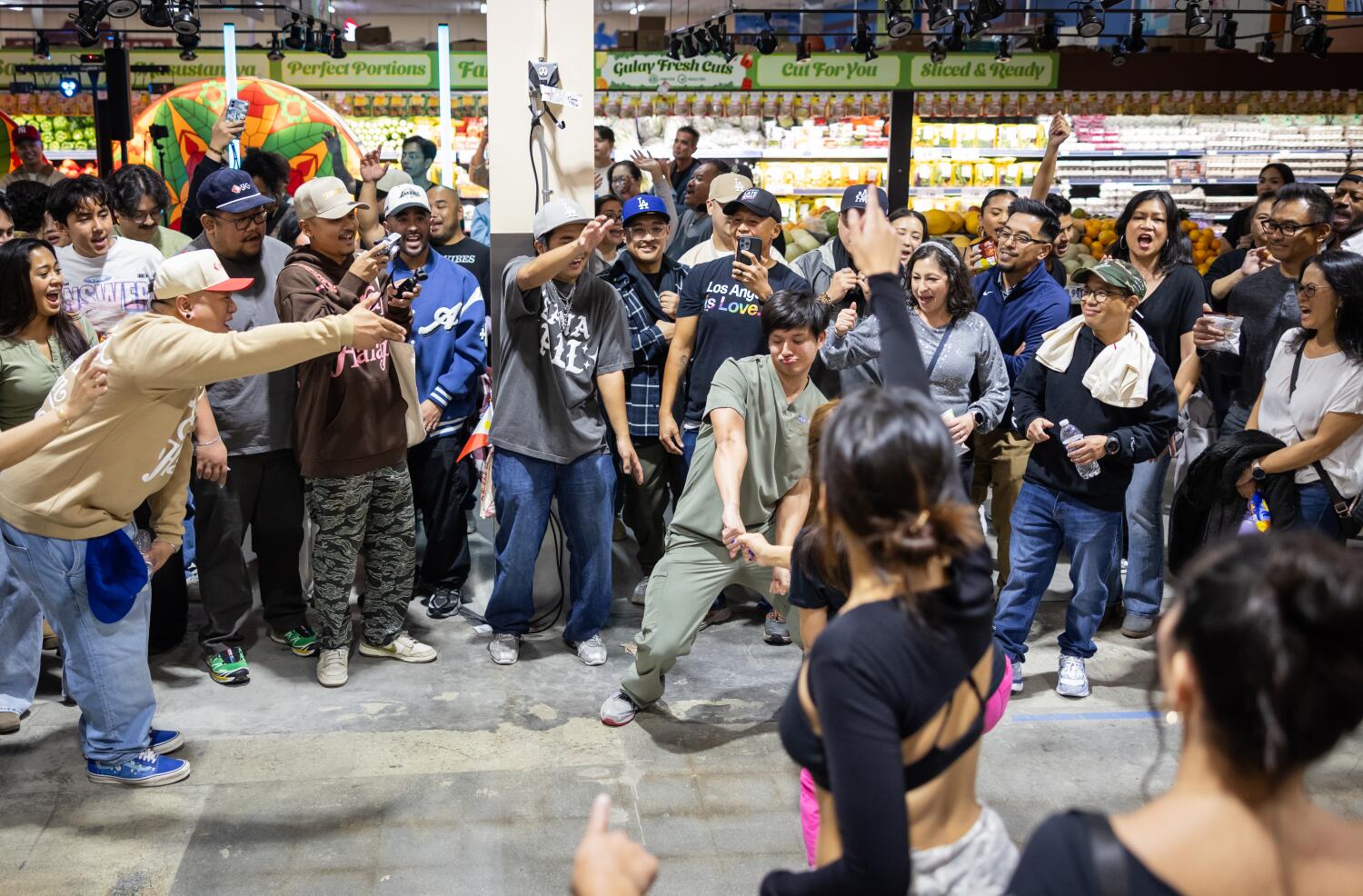
For the uninitiated, the sight of hundreds of Gen Z and Millennial Angelenos swarming a grocery store on a Saturday night looks like a glitch in the Matrix. They aren't there for the weekly specials on bangus. They are there because Seafood City—specifically the Grill City and Jollibee outposts embedded within its fluorescent-lit aisles—has become a third space that requires no cover charge and offers a sensory overload that no "immersive" art pop-up can replicate. It is loud, it smells of charred pork skewers, and it is unapologetically real.
The Infrastructure of a Viral Grocery Store
To understand how a supermarket became a destination, you have to look at the architectural shift in how we consume "vibes." Most modern retail spaces are designed for efficiency; you get in, you buy, you leave. Seafood City operates on a different blueprint. By integrating the "turo-turo" (point-point) style dining directly into the grocery footprint, they created a high-traffic crossroads where the errand of shopping and the leisure of dining are inseparable.
This layout creates a constant state of motion. There is a specific kinetic energy to a Seafood City at 8:00 PM. You have families doing their heavy lifting for the week bumping carts with twenty-somethings in designer streetwear who are just there for the halo-halo. This collision of demographics is exactly what the polished, gatekept venues of West Hollywood lack. When every person in a room looks exactly like you, the room is dead. Seafood City feels alive because it is a chaotic cross-section of the city.
The Economics of the Cheap Hang
Inflation has done more to reshape social habits than any trend forecaster. When a standard night out in Los Angeles now carries a baseline price tag of $100 before you’ve even parked the car, the value proposition of a supermarket changes. At Seafood City, $15 buys a mountain of chicken adobo, garlic rice, and a drink.
This isn't just about being thrifty. It’s about the democratization of the "night out." We are seeing a massive migration of social energy toward spaces that don't demand a certain tax bracket to enter. The "viral" nature of the spot is merely the digital symptom of a physical reality: people are tired of being overcharged for mediocrity. They would rather eat off a plastic tray in a bright grocery store if it means they can actually afford to bring five friends along.
The Cultural Weight of the Grill City Smoke
There is a visceral, olfactory component to this phenomenon that the internet cannot capture. The smoke from the heavy-duty grills at the back of the store acts as a beacon. For the Filipino-American diaspora, this is a nostalgic homecoming. For everyone else, it’s an invitation into a culture that centers hospitality and shared plates over individual portions.
The "cool factor" here isn't manufactured by a PR firm. It stems from the fact that Seafood City never tried to be cool. It tried to be a functional, reliable hub for a specific community. In an era where "authenticity" is a buzzword used to sell overpriced artisanal toast, true authenticity—the kind that involves linoleum floors and the sound of a butcher’s saw—is magnetic.
Breaking the Third Space Crisis
Urban planners have been mourning the death of the "third space" for a decade. With the decline of malls and the privatization of parks, there are few places left where you can exist without the constant pressure to spend significant money. Seafood City has accidentally filled this vacuum.
It functions as a town square. You see people lingering. They talk. They debate which cut of fish is best for sinigang while waiting for their number to be called at the counter. This lingering is a radical act in a city designed to keep people moving in their private vehicles from one private destination to another. The grocery store has become a sanctuary of loitering.
The Algorithm as a Double Edged Sword
The influx of "tourist" crowds driven by social media peaks presents a unique challenge for the brand. When a space goes viral for its "aesthetic" or its "ironic" appeal, it risks alienating the core customer base that kept the lights on for decades.
We’ve seen this script before. A "hidden gem" is discovered, the lines become untenable, the prices creep up to capitalize on the hype, and the soul of the place evaporates. However, Seafood City has a built-in defense mechanism: the grocery business. Unlike a boutique restaurant that can pivot its entire identity to cater to influencers, Seafood City must remain a functional supermarket. The need to sell bitter melon and shrimp paste at competitive prices keeps the floor grounded. It prevents the space from fully ascending into the stratosphere of "manufactured cool."
The Power of the Filipino Food Boom
The broader context is the long-overdue mainstreaming of Filipino cuisine. For years, it was the "quiet" giant of the Southeast Asian food scene, often overshadowed by the ubiquity of Thai and Vietnamese spots. Now, the boldness of Filipino flavors—the vinegar-heavy punches, the fermented depths, the extreme sweetness of the desserts—is the primary draw.
Seafood City serves as the gateway drug. It is accessible, it is fast, and it is loud. It removes the intimidation factor of a formal sit-down restaurant and replaces it with a "choose your own adventure" style of eating. This low barrier to entry is essential for cultural diffusion.
The Logistics of the Midnight Rush
Operating a high-volume grocery store that doubles as a late-night dining destination is a logistical nightmare. The staff at these locations are essentially running two businesses simultaneously. You have the inventory management of a diverse supermarket and the rapid-fire production of a commercial kitchen.
The success of these locations depends on a brutal efficiency that is rarely acknowledged by the people filming their TikToks. The supply chain required to keep fresh seafood and marinated meats moving at this pace is a marvel of regional distribution. If the supply chain falters, the "vibe" disappears instantly. You can't have a viral party spot if you run out of pork skewers at 7:00 PM.
Beyond the Trend
Is this a permanent shift or a temporary obsession? History suggests that while the "viral" crowds may eventually move on to the next quirky location, the fundamental shift in how we use retail space is here to stay.
The Seafood City model proves that people are hungry for multi-use environments. They want places that provide utility (groceries) alongside social connection (dining). They want places that don't feel like they were designed by a committee of branding experts.
If you want to see the future of urban social life, don't look at the blueprints for the next $500 million mixed-use development. Look at the supermarket parking lot at 9:00 PM on a Friday. Look at the smoke rising from the grills and the diverse crowd huddled around plastic tables.
Go to the condiment station. Watch someone expertly mix their dipping sauce—a precise ratio of soy sauce, calamansi, and chili. That person isn't there because a TikTok told them to be. They are there because they are hungry, and because for the first time in a long time, the most exciting place in Los Angeles is also the most honest one.
The party isn't in the VIP lounge anymore. It’s in Aisle 4.