The glass is cool to the touch, but it feels like a live wire.
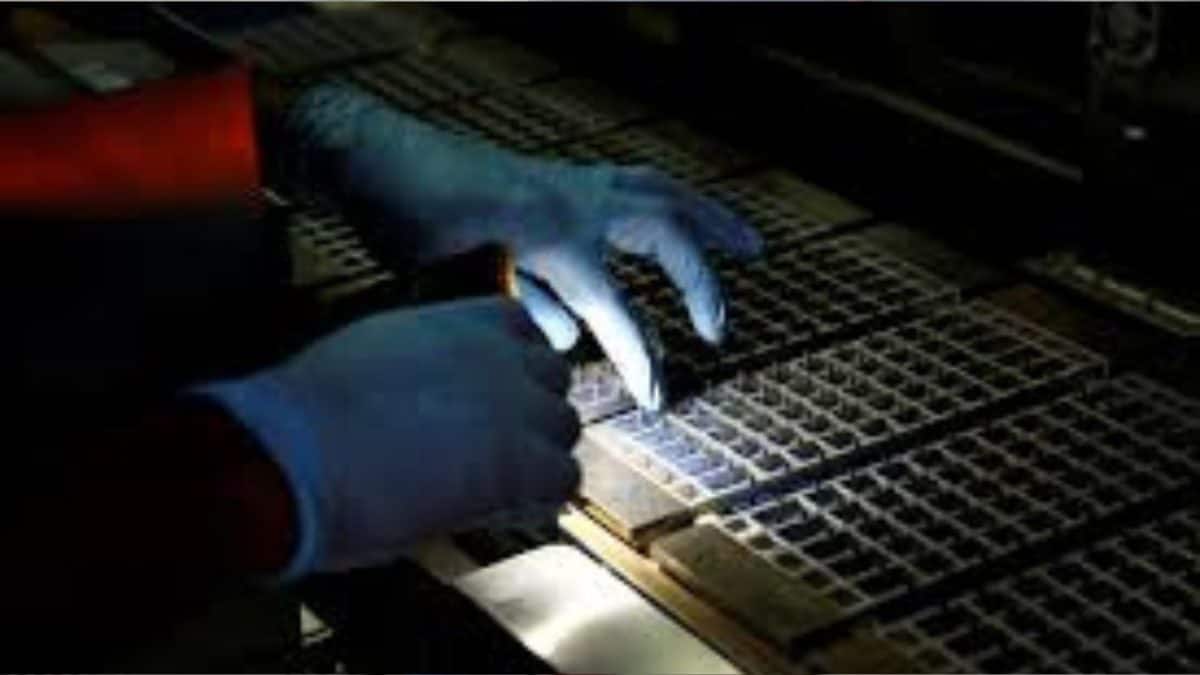
In a dusty warehouse on the outskirts of Ahmedabad, or perhaps a humid loading dock in Vientiane, a worker runs a microfiber cloth over a sapphire-blue rectangle. This is a solar cell. To the worker, it is a daily wage. To the engineer in Ohio, it is a component for a residential rooftop. To the Department of Commerce in Washington D.C., it is a weapon in a simmering economic war.
We often talk about trade policy as if it were a game of chess played with invisible pieces. We use words like "subsidies" and "countervailing duties" to sanitize the reality that governments are actively trying to change the price of the sun. This week, the price went up.
The United States recently finalized a new set of tariffs on solar cells and panels imported from India, Indonesia, Laos, and Cambodia. This isn't just a footnote in a trade ledger. It is a fundamental shift in the gravity of the green energy transition. By slapping duties on these four nations, the U.S. is effectively saying that the origin of a photon-catching wafer matters more than how quickly we can deploy them.
The Ghost of the Supply Chain
Think about a single solar panel. It isn't born; it is assembled through a grueling, cross-border odyssey. For years, the story was simple: China dominated the market. They built massive factories, verticalized their supply chains, and drove costs down so low that American manufacturers couldn't breathe.
To protect domestic jobs, the U.S. erected walls of tariffs. But money, like water, finds the path of least resistance.
Manufacturers didn't just give up. They moved. They set up shop in Southeast Asia and India. They funneled Chinese components through these third-party nations, added a layer of local labor, and shipped the "non-Chinese" product to American shores. It was a shell game played with silicon and silver paste.
The new duties are the U.S. government’s attempt to flip the table.
The numbers are staggering. In some cases, the preliminary duties on Indian solar imports are pegged at roughly 3%, while certain Indonesian exporters face rates over 13%. In Laos, the numbers climb even higher. To a bureaucrat, a 13% duty is a tactical adjustment. To a project developer in Arizona trying to finance a multi-billion-dollar solar farm, it is a landmine.
The Human Cost of Protectionism
Meet "Sarah." She doesn’t exist in a spreadsheet, but she exists in every suburban town in America. Sarah owns a small solar installation company. She has twelve employees, six trucks, and a mounting pile of debt.
Last year, Sarah could quote a homeowner a price that made sense. The payback period—the time it takes for the electricity savings to cover the cost of the panels—was seven years. With these new tariffs, her hardware costs just jumped. Now, that payback period is nine years.
Homeowners hesitate. The "maybe later" becomes a "no."
When the Department of Commerce "slaps" a tariff on a cell from Cambodia, they aren't just hitting a foreign corporation. They are hitting Sarah’s payroll. They are hitting the roofer who was supposed to spend Tuesday on a ladder and is now sitting at home because the project was canceled.
There is a profound tension here. We want to save the planet. We also want to save our domestic industry. The problem is that these two goals are currently sprinting in opposite directions. To build an American solar manufacturing base from scratch requires high prices to make the investment "robust"—a word I hate, but one the industry loves—enough to survive. But to reach climate goals, we need prices to be as low as humanly possible.
The Looming Shadow of the "Circumvention"
The logic behind these tariffs is rooted in the idea of "fairness." The U.S. argues that foreign governments provide unfair subsidies to their solar industries, allowing them to "dump" cheap products into the American market.
Imagine you are running a lemonade stand. You buy your lemons for fifty cents. Your neighbor’s parents, however, buy them all the lemons for free. Your neighbor sells lemonade for a dime, while you have to charge a dollar just to break even. You’d be angry. You’d want the neighborhood association to step in.
That is the American position.
But the reality is far messier. The global solar market isn't a neighborhood lemonade stand; it’s a hyper-integrated web. Much of the equipment used in Indian or Laotian factories is Chinese. The raw polysilicon often originates in the same regions. By targeting these four specific countries, the U.S. is trying to prune the branches of a tree whose roots are still firmly planted elsewhere.
The risk is that we are building a wall out of the very bricks we need to build our house.
Consider the sheer scale of the energy we need to generate. We are talking about terawatts. We are talking about replacing coal plants that have been humming for fifty years. Every time a tariff is added, the friction of the transition increases. We aren't just taxing a product; we are taxing time.
And time is the one resource we don't have.
The Invisible Stakes
There is a quiet irony in the fact that these tariffs come at a time when the U.S. is pouring billions into the Inflation Reduction Act (IRA). We are simultaneously handing out subsidies to build solar and charging taxes to import the parts needed to build it.
It is a tug-of-war where the rope is the American consumer.
If you walk through a solar farm in the Mojave Desert, you see miles of blue glass tilting toward the sun. It looks like a miracle. Silence. No smoke. Just the hum of inverters turning light into the power that chills your milk and charges your phone.
But look closer at the back of those panels. You’ll see the labels: Made in India. Made in Cambodia. Made in Vietnam. These labels are the scars of a global trade war.
The proponents of the tariffs argue that this pain is necessary. They say that without these duties, the U.S. will be forever dependent on foreign energy technology, trading a dependence on Middle Eastern oil for a dependence on Asian silicon. They want "energy sovereignty."
It’s a seductive phrase. It sounds like freedom.
But sovereignty is expensive.
The Friction of Progress
The immediate result of these duties won't be a sudden surge in American-made panels. Factories don't sprout like mushrooms after a rainstorm. They take years to permit, build, and calibrate. In the interim, there will be a vacuum.
Projects will be delayed. Contract disputes will clog the courts as developers try to invoke "force majeure" clauses to escape price hikes they didn't see coming. The momentum that has been building in the renewable sector for a decade is being met with a sudden, jarring brake.
We are forced to ask: what is the "correct" price for a solar panel?
Is it the price dictated by the most efficient global producer? Or is it the price required to sustain a factory in Georgia or Texas?
There is no easy answer. If we choose the former, we lose our industrial base. If we choose the latter, we slow down the fight against a warming world. We are trapped in a zero-sum game where the stakes are the literal atmosphere.
The worker in that Ahmedabad warehouse doesn't care about the Federal Register. They care about the shipment leaving on time. The installer in Ohio doesn't care about "antidumping" statutes. They care about whether they can keep their crew employed through the winter.
Between these two human realities lies the cold, hard machinery of the State.
The U.S. has made its move. It has decided that the integrity of the market is worth the increase in price. It has decided that the long-term goal of domestic manufacturing outweighs the short-term need for cheap deployment.
History will judge if this was a brilliant strategic pivot or a catastrophic self-inflicted wound. But for now, the sun is shining just as brightly as it did yesterday. It’s just that, starting this week, catching that light became a whole lot more expensive.
The panels are still sitting on the docks. The invoices are being rewritten. Somewhere, a project manager is staring at a spreadsheet and realizing the numbers no longer work.
The light is free. The glass is not.