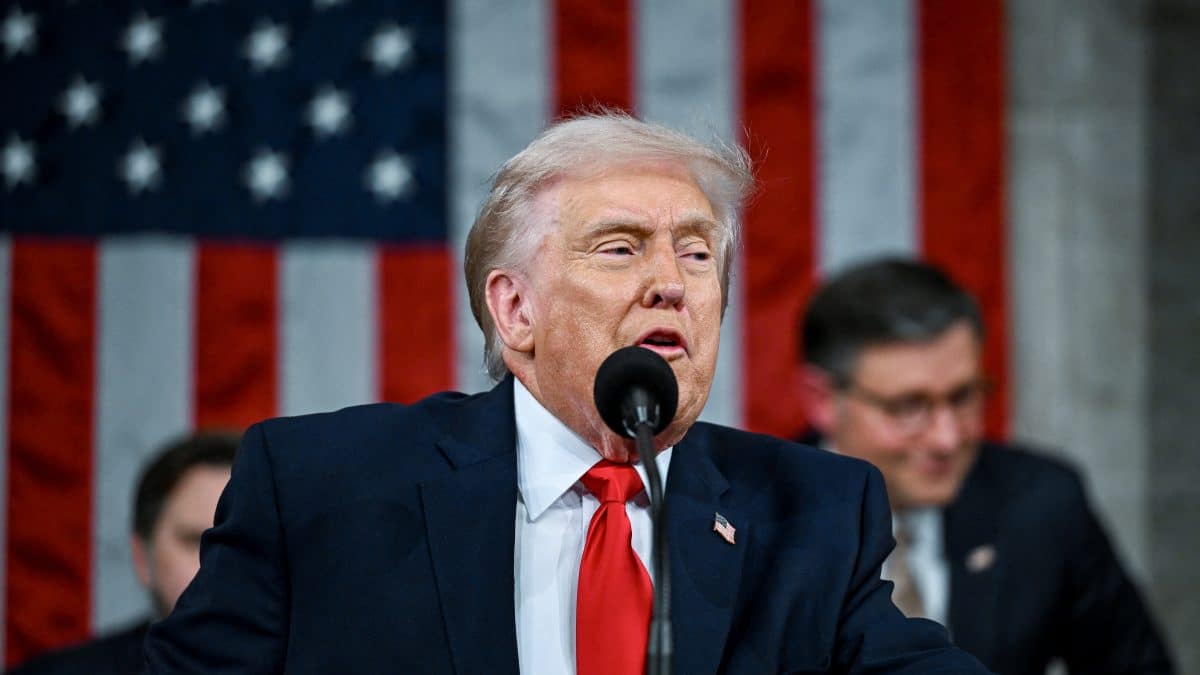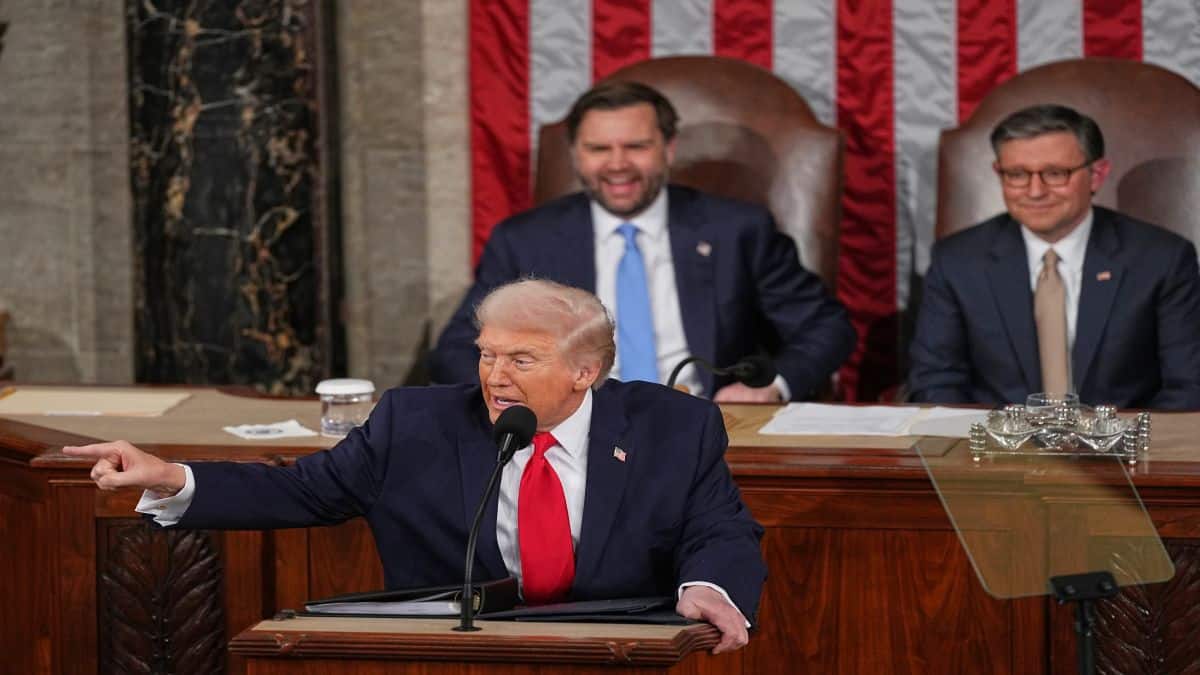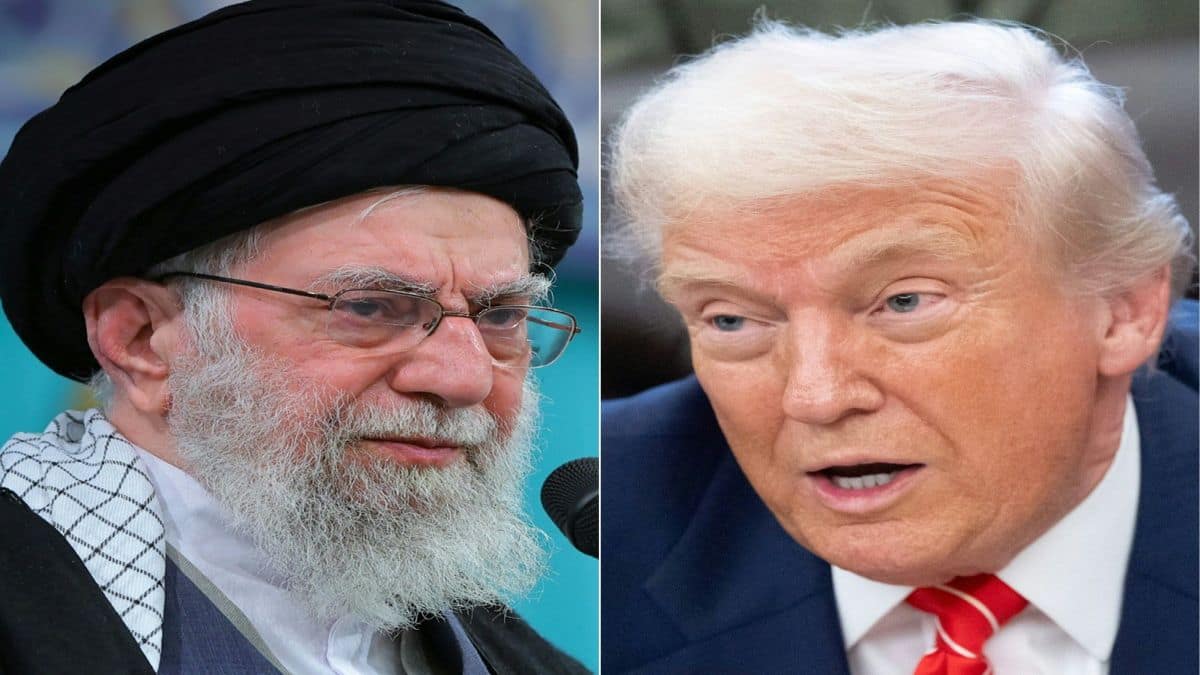
Donald Trump just dropped a bombshell during his latest address, claiming Iran is on the verge of launching missiles that could hit the American heartland. It's a terrifying thought. The idea of an intercontinental ballistic missile (ICBM) screaming across the Atlantic or Pacific to hit a U.S. city is the stuff of Cold War nightmares. But before you start looking for the nearest fallout shelter, we need to look at the massive gap between the President's rhetoric and what the actual intelligence community is reporting.
The timing isn't an accident. We're currently in the middle of high-stakes nuclear talks, and the U.S. just launched "Operation Epic Fury," a series of joint strikes with Israel against Iranian targets. Trump is making the case for a "maximum pressure" campaign that looks more like a push for regime change than a simple diplomatic nudge. He's telling us the threat is imminent. The data, however, tells a different story.
The ICBM gap between rhetoric and reality
Trump's core claim is that Iran is "working on missiles that will soon reach" the United States. If that were true, it'd change everything about our national security posture. But the 2025 Defense Intelligence Agency (DIA) assessment is still the gold standard here, and it says something very different. According to that report, Iran is likely a decade away from a "militarily viable" ICBM. We're talking 2035, not next Tuesday.
Building a missile that can travel 10,000 kilometers isn't just about big engines. You have to master:
- Re-entry vehicle technology: The warhead has to survive the intense heat of re-entering the atmosphere without burning up.
- Miniaturization: You can't just strap a clunky nuclear device to a rocket; it has to be small enough and light enough to fly that distance.
- Targeting and guidance: Hitting a city from another continent requires precision that Iran hasn't demonstrated with long-range systems yet.
Experts like David Albright and teams at the Federation of American Scientists point out that while Iran has the largest missile arsenal in the Middle East, most of it is short-to-medium range. They can hit Tel Aviv. They can hit U.S. bases in Qatar. They can even reach parts of Southeast Europe. But the "American homeland"? That's a massive technical leap they haven't made.
Why the White House is sounding the alarm now
If the intel says 2035, why is the President saying "soon"? It's about leverage. The Trump administration is currently trying to force Tehran into a deal that doesn't just stop their nuclear enrichment but also guts their entire ballistic missile program. Tehran has called their missile program a "red line" they won't cross. By framing the missiles as a direct threat to New York or D.C., the administration builds the political capital needed for things like the February 2026 strikes.
Secretary of State Marco Rubio has been more careful with his words than the President, but he's still pushing the narrative. He's pointed to Iran’s space-launch vehicles (SLVs) as proof of intent. It's a fair point: the tech used to put a satellite into orbit is basically the same tech used to send a warhead across the globe. If you can launch a satellite, you're halfway to an ICBM. But "halfway" in rocket science can still mean years of failed tests and technical bottlenecks.
The state of the 2026 nuclear negotiations
While the bombs are falling, the diplomats are still talking—or at least trying to. The talks in Geneva have been a rollercoaster. Omani mediators recently suggested a peace deal was "within reach," claiming Iran was willing to blend down its 60% enriched uranium and grant "full access" to IAEA inspectors.
Trump isn't buying it. He's called the negotiations a "pattern of retreat" by Tehran. He basically thinks they're playing for time while they rebuild what was damaged in the 2025 strikes. This creates a bizarre "strike while we talk" dynamic. The administration's goal seems to be the total dismantling of Iran's industrial-grade material capacity, which some officials, like Steve Witkoff, claim is only a week away from being "bomb-ready."
What happens if the regime actually collapses
The most aggressive angle of the current policy isn't just "no nukes"—it's the open call for the Iranian people to overthrow their government. Following the strikes on February 28, Trump issued a video message urging Iranians to take control. This moves the goalposts from non-proliferation to regime change.
It’s a high-risk gamble. If the Islamic Revolutionary Guard Corps (IRGC) feels cornered, they don't just disappear. They have "wired" the country's infrastructure. A collapsed central government in Tehran could lead to a power vacuum that makes the post-2003 Iraq situation look like a rehearsal. Plus, Iran has already retaliated by striking U.S. bases in the region and hitting targets in Israel. We're not just talking about hypothetical missiles anymore; we're in an active conflict.
Separating the fear from the facts
It's easy to get lost in the headlines, so let's get the facts straight. Iran has a dangerous, sophisticated missile program that threatens our allies and our troops overseas. That's a reality. They have successfully increased the precision and range of their current fleet.
However, there is no unclassified evidence that they have a functional missile capable of hitting the continental United States today, or even next year. The President is using the potential of a future threat to justify current military action. Whether you think that's a brilliant strategic move or a dangerous exaggeration depends on how much you trust the administration's "Maximum Pressure 2.0" strategy.
If you're following this, keep your eyes on the IAEA reports. They’re the ones on the ground (when they're allowed in) who can actually verify if Iran is enriching to weapons-grade levels. Everything else right now is a mix of political signaling and psychological warfare designed to bring a defiant regime to its knees.
Don't just take the headlines at face value. Look for the actual range ratings on the latest missile tests and check if the Pentagon's official "Threat Assessment" changes. Until the DIA moves that 2035 date closer to the present, the "imminent" threat to the U.S. mainland remains more of a political tool than a military reality.