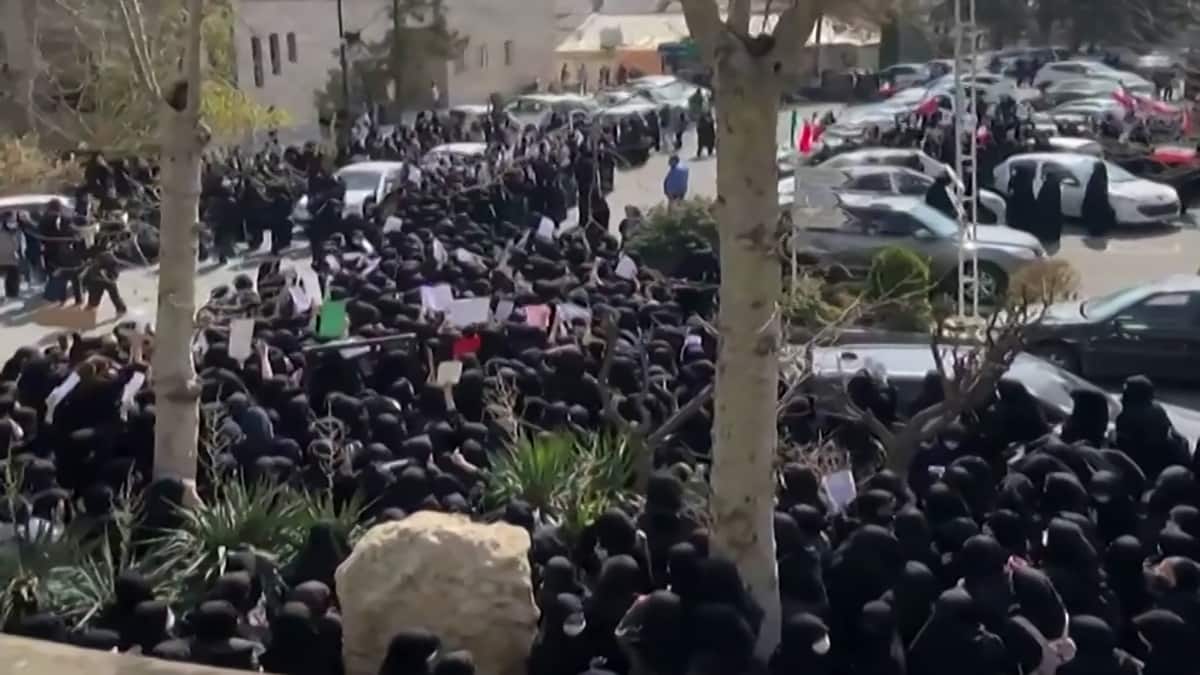
Walk into any major university in Tehran or Mashhad right now and you'll see something that looks more like an occupied zone than a place of learning. Military pick-up trucks with mounted machine guns are parked right outside library doors. Plainclothes agents with earpieces pace the hallways of Sharif University and the University of Tehran. The message from the state is blunt: we aren't just watching you; we're ready to shoot.
The Iranian government is currently trying to suffocate a second wave of massive student protests that reignited in late February 2026. This isn't just a minor scuffle over tuition or dress codes. It's a high-stakes standoff following the "Red Winter" of January 2026, where security forces killed thousands of people during nationwide economic and political uprisings. The campuses have become the final line of defense for a regime that's lost its grip on the streets.
The Siege of the Ivory Tower
The current escalation began around February 21, 2026. Students returned for the new semester only to find their campuses crawling with Basij paramilitary forces and IRGC-linked security details. Instead of letting students mourn the hundreds of classmates lost in January, the state decided to preemptively strike.
At Khajeh Nasir University and the University of Science and Technology, the crackdown is surgical. They aren't just using tear gas anymore. Reports from the ground describe "disciplinary committees" that are essentially kangaroo courts. In some cases, students get an SMS summons, go to a 15-minute hearing, and find themselves banned from campus indefinitely.
But it’s the physical presence of the armed forces that’s most jarring. We’re seeing:
- Machine-gun mounted vehicles stationed at the gates of Tehran University.
- Chained library doors at Shiraz University to trap protesters inside for "identification."
- Facial recognition tech being used by Basij agents to build "blacklists" before rallies even start.
Why the Regime is Scared of Students
You might wonder why a government with tanks and missiles is so obsessed with a few thousand kids in sneakers. It's because the university in Iran is the last place where "organized" dissent happens. When the government shuts down the internet—which they did for most of January—the dorms and classrooms become the only nodes where people can actually talk and plan without being tracked by a central server.
The state’s biggest fear is that the student movement will bridge the gap between the middle-class political demands and the working-class economic rage. In February 2026, we saw students at Ferdowsi University in Mashhad chanting about the price of eggs and the crashing rial right alongside slogans against the Supreme Leader. That’s a lethal combination for the clerical establishment.
The Virtual Lockdown Tactic
When the guns don’t work, the regime uses "management." That’s their code for forcing classes online. By the last week of February, nearly 80% of Iran’s universities were ordered to move to virtual learning.
It's a clever, if desperate, move. If there’s no campus to go to, there’s no place to gather. At Kharazmi University, students saw right through this and staged sit-ins specifically against virtual classes. Their chant says it all: "If the classes become virtual, our slogans will become more radical!" They know that being dispersed into their homes makes them easier to arrest one by one.
The Human Cost You Won't See on State TV
While the Iranian government admits to about 3,000 deaths since December 2025, human rights groups like HRANA have already documented over 7,000. Some estimates from internal hospital sources suggest the number is much higher, especially after the January 8 and 9 massacres.
The students are now wearing black not just as a fashion choice, but as a walking memorial. At the University of Art in Tehran, students have been seen tearing down signs of the Supreme Leader’s representatives. They’re done with the "reformist vs. hardliner" debate. The slogans have shifted to a complete rejection of the system, with many manifestos calling for a "democratic republic" that moves past both the current theocracy and the old monarchy.
What Happens When the Red Lines are Crossed
Fatemeh Mohajerani, the government spokeswoman, recently warned that the national flag is a "red line." But for the students who watched their friends get shot in January, those lines were crossed long ago.
The military deployment might keep the lids on the pots for a few days, but it's not a solution. You can't run a modern economy or a functioning society when your best and brightest are either in Evin Prison or facing down a machine gun in the cafeteria.
If you're following this, keep an eye on the strikes. The real danger to the regime isn't just the shouting on campus—it's what happens when those students convince their parents in the bazaars and factories to stop working. That’s the nightmare scenario the armed forces are trying to prevent.
If you want to support the flow of information, follow verified student telegram channels like 'United Students' or check the daily updates from the Human Rights Activists News Agency (HRANA). They’re often the only ones getting footage out when the state tries to pull the plug on the grid.