The air in Jerusalem possesses a specific, heavy stillness. It is a city that remembers everything. When Narendra Modi stepped off the plane to become the first Indian Prime Minister to touch Israeli soil, the weight of seventy years of diplomatic tiptoeing didn't just vanish. It transformed.
For decades, the relationship between India and Israel was a ghost. It existed in the hushed corridors of intelligence agencies and the urgent, whispered needs of defense procurement, but it rarely stepped into the sunlight. It was a friendship of necessity kept in the basement. Then, in a flurry of blue and white and saffron, the basement door was kicked open.
Standing before the Knesset, the heartbeat of Israeli democracy, Modi wasn't just delivering a speech. He was narrating a homecoming.
The Shadow in the Room
History is often written in ink, but it is felt in the gut. To understand why a Prime Minister’s visit to a small Mediterranean nation matters to a farmer in Haryana or a tech lead in Bengaluru, you have to look at the shared scar tissue. Both nations were born from the traumatic withdrawal of the British Empire in the late 1940s. Both were immediately surrounded by neighbors who didn't just disagree with their existence but actively sought to end it.
When Modi stood at the podium and uttered the words, "Terror anywhere threatens peace everywhere," he wasn't recycling a tired political slogan. He was speaking to a room full of people who have spent their lives measuring the distance to the nearest bomb shelter.
Terrorism is often discussed in the abstract, as a "global challenge" or a "policy hurdle." But in the Knesset, it is a neighbor. It is the sound of a siren during a school lunch. By linking the security of the Indian subcontinent to the security of the Levant, Modi effectively erased the 4,000 kilometers between New Delhi and Jerusalem. He argued that the ideology that fuels a suicide vest in a Kabul market is the exact same DNA as the one that targets a bus in Tel Aviv.
The strategy was clear: unity through shared vulnerability.
More Than Iron Domes
If the story ended at defense, it would be a simple transaction. One side has the tech; the other has the budget. But the human element of this shift is found in the dirt and the water.
Consider a hypothetical farmer named Rajesh in the arid belts of Rajasthan. For him, "diplomatic milestones" are meaningless noise on a radio. What matters is the moisture in his soil. Israel, a country that is roughly 60% desert, has somehow mastered the art of "making the desert bloom" through desalination and precision drip irrigation.
During the visit, the focus shifted from the "Iron Dome" that protects the sky to the plastic pipes that protect the harvest. The two leaders weren't just talking about missiles; they were talking about "More crop per drop." This is where the abstract becomes visceral. When a nation that has conquered water scarcity shakes hands with a nation that is still fighting it, the result isn't a "memorandum of understanding." It is a lifeline.
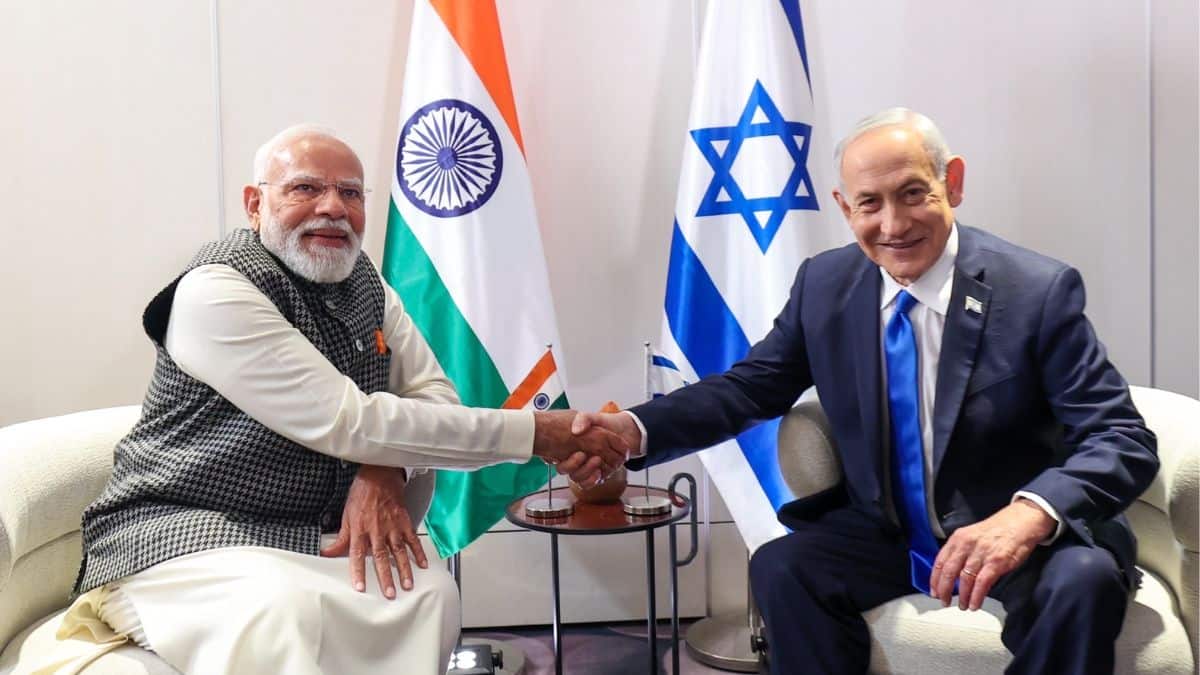
The chemistry between Modi and Benjamin Netanyahu was, by all accounts, an anomaly in the often-stiff world of international relations. They walked barefoot on the beach at Olga. They looked at a mobile desalination unit as if it were a Ferrari. This wasn't the cold, calculated posture of two heads of state fulfilling a protocol. It was the frantic energy of two pioneers realizing they’ve been working on the same puzzle from different sides of the world.
The Invisible Stakes
Why did it take so long? Why did India wait seventy years to send a Prime Minister?
The answer lies in the delicate, often agonizing balance of domestic politics and energy security. For years, India feared that a public embrace of Israel would alienate the Arab world—the same world that provides India’s oil and houses millions of its workers. It was a geopolitical tightrope walk performed in the dark.
Modi’s visit was the sound of the tightrope snapping.
He bet that India had grown large enough, and the world had become interconnected enough, that it no longer had to choose between friends. He gambled on the idea that India could be a partner to Palestine and a "soulmate" to Israel simultaneously. It was a rejection of the zero-sum game that has paralyzed Middle Eastern diplomacy for a century.
The Knesset speech was the climax of this gamble. By calling for "coordinated global action," Modi was calling for an end to the "good terrorist vs. bad terrorist" narrative. He was demanding a standard of morality that doesn't shift based on the geography of the victim.
The Digital Bridge
Beyond the fields and the bunkers, there is the Silicon connection.
If you walk through the tech hubs of Tel Aviv or the office parks of Hyderabad, the language is identical. It is the language of the "Start-Up Nation" meeting the "Digital India" initiative. During the updates from the visit, much was made of the multi-million dollar innovation funds and the R&D hubs.
But look closer at the people.
The real bridge is the thousands of young Israelis who flock to the mountains of Himachal Pradesh after their military service, seeking the peace that their own borders often deny them. And it is the Indian engineers who look to Israeli cybersecurity firms as the gold standard of resilience. There is a mutual recognition of the "jugaad" spirit—the Israeli chutzpah—the refusal to accept that a problem is unsolvable just because the resources are scarce.
The Echo of the Speech
As the Prime Minister concluded his remarks in the Knesset, he wasn't just talking to the lawmakers in the room. He was talking to the history books. He spoke of the Jewish community in India, a group that has lived in the country for two millennia without ever facing a single instance of anti-Semitism.
That fact alone is a miracle of human history.
It provided the emotional anchor for everything else. It suggested that the alliance isn't built on a shared hatred of an enemy, but on a shared philosophy of pluralism. In a world that seems to be fracturing into smaller, angrier pieces, the sight of the world’s largest democracy and the Middle East’s only democracy standing in a lockstep embrace was a jarring, hopeful image.
The visit changed the "Israel-India" tag from a defense-industry footnote to a cultural and strategic powerhouse. It moved the needle from "it’s complicated" to "it’s essential."
As the motorcade wound its way back through the ancient, golden-stoned streets of Jerusalem toward the airport, the silence returned. But it was a different kind of silence. It wasn't the silence of things left unsaid or friendships kept hidden. It was the quiet, industrious hum of a plan finally being set into motion.
The ghost had finally taken on flesh and bone.
The sun set over the Mediterranean, casting long shadows across the tarmac where the plane waited. In those shadows, the old world of hesitant shadows and secret handshakes stayed behind, replaced by a glaring, unavoidable light.
The walk to the Knesset was over, but the road it opened is only just beginning to be paved.